

TikTok's 2026 review system is mostly automated, which means false positives are frequent and rejection patterns are predictable. Around 28% of global rejections trace back to misleading claims, landing-page issues account for roughly half of all cases, and AI-generated content without disclosure is the newest category catching brands off guard. This guide covers the 9 most common reasons TikTok ads get rejected in 2026, the exact fix for each, and how to prevent it from happening again.
- How TikTok’s Ad Review Process Works in 2026
- 9 Common Reasons Why TikTok Ads Get Rejected
- 1. Misleading or Exaggerated Claims
- 2. Low-Quality Creative (Video, Audio, Images)
- 3. Landing Page Issues
- 4. Intellectual Property Violations
- 5. Prohibited or Restricted Products
- 6. Inconsistent Ad Creative
- 7. Text, Grammar, and Formatting Errors
- 8. AI-Generated Content Without Proper Labelling (New in 2026)
- 9. Ad Format and Technical Non-Compliance
- How to Fix a Rejected TikTok Ad: Step-by-Step
- How to Prevent TikTok Ad Rejections
- Pre-Launch Checklist to Prevent TikTok Ad Rejection
- Trigger Words to Remove from Your TikTok Ad Copy
- Why TikTok Agency Ad Accounts Reduce Rejection Rates
- How Tech4You Helps Brands Stop Hitting the Rejection Wall
- FAQ
- Why are my TikTok ads not approved?
- How to fix a rejected TikTok ad?
- How long does TikTok ad review take?
- Can agency accounts help with TikTok ad approvals?
How TikTok’s Ad Review Process Works in 2026
The TikTok ad review process has two stages: automated and human. The automated layer runs first and handles most decisions.
You submit the ad. The AI scans your creative, caption, and landing page against the TikTok Advertising Policies, runs the text through restricted-keyword and trademark filters, and crawls the destination URL. Most decisions come back within 24 hours, sometimes within minutes.
Edge cases – where the system can’t classify your ad with confidence – get routed to a human reviewer. That stage takes a few hours to a few days, longer during Q4 and Black Friday peaks.
The 2026 version is stricter than what advertisers were used to. AI-generated content has to be disclosed. Restricted industries need pre-certification before submission. And landing-page checks look at privacy policies, mobile load speed, and consistency with the ad — not just whether the URL resolves.
One thing that catches people out: approval isn’t permanent. An ad can pass review, run for two weeks, and get rejected retroactively if users hide it or report it. TikTok runs ongoing checks on live ads.
9 Common Reasons Why TikTok Ads Get Rejected
These nine cover roughly 90% of the TikTok ad rejected cases we see. They’re ordered by how often they show up.
1. Misleading or Exaggerated Claims
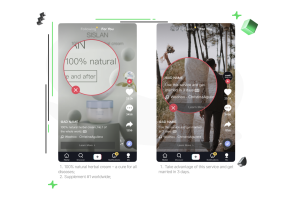
The single biggest cause of rejection. TikTok Business Transparency data points to around 28% of global ad rejections being tied to misleading or false claims, most of them in health, wellness, and finance.
Such claims most often aren’t the obviously fraudulent ones – they’re the kind of marketing language that’s been standard practice for years. “Lose 10 pounds in a week.” “Clear your acne in 2 days.” “Guaranteed passive income with zero effort.” “100% effective.” These phrases feel normal in advertising copy. On TikTok in 2026, they’re reliable rejection triggers.
The policy is clear on this: no exaggerated results, no absolute claims about time, performance, or guaranteed outcomes. The issue isn’t intent – it’s the language itself. An absolute promise is an unverifiable promise, and TikTok’s review system treats them the same way regardless of whether your product actually works.
What catches advertisers off guard is that the threshold is lower than they expect. You don’t have to claim you can cure cancer to get flagged. “Clinically proven” in a caption, without the clinical evidence visible on your landing page, is enough. A countdown timer promising results “in just 48 hours” is enough. Even “the most effective solution” can be flagged as an unsubstantiated superlative if there’s nothing on the destination page to back it up.
Fix: Swap absolute language for qualified statements – “helps with,” “supports,” “may reduce,” “designed to” still communicate your product’s value without making promises the platform won’t allow. For health and beauty specifically, your landing page needs to carry the substantiation: clinical study references, ingredient sourcing, third-party certifications. TikTok reviews your destination page as part of the same process as the ad itself, so a compliant ad linked to an unsubstantiated page is still a rejected ad. Check the trigger word table in section 7 before finalizing any copy.
2. Low-Quality Creative (Video, Audio, Images)
TikTok cares about creative quality because users do. The platform’s algorithm rewards content that holds attention, and ads with weak production quality get less attention than the organic videos around them. The review system uses production quality as a proxy for whether the ad will hurt the feed.
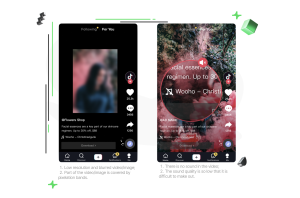
A few things will get a TikTok ad creative rejected on quality grounds alone, with no policy violation involved:
- Low-resolution video.
- Audio that’s distorted, too quiet, or absent entirely.
- Black bars filling space on a vertical placement because someone uploaded horizontal video without re-cropping.
- On-screen text so small or blurry that it’s unreadable on a phone.
- Watermarks from third-party editing tools that the brand forgot to strip.
Fix: Strip black bars by reshooting in vertical or re-cropping properly. The TikTok Creative Center has reference examples for almost every major vertical.
3. Landing Page Issues
Around half of all rejections trace back to the landing page, not the creative itself. The page is treated as part of the ad. The system reviews the creative, the caption, and the destination URL together. A TikTok landing page rejected for any of the reasons below takes the whole campaign down with it.
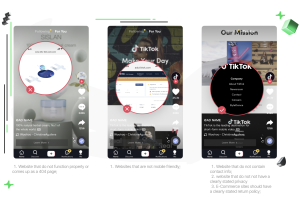
The four landing-page problems that come up most:
- The page is missing something it has to have, in particular privacy policy, terms of service, contact info, return policy.
- The page is too slow. Mobile load over 3 seconds and you’re at risk; over 5 seconds and you’re almost guaranteed to be flagged.
- The page shows a maintenance message or a 404 error.
Fix: Run your landing page through Google PageSpeed Insights and aim for under 3 seconds on mobile. Make sure the footer has a working privacy policy and terms link. If you’re running e-commerce, add a visible refund and return policy.
4. Intellectual Property Violations
This is the category that catches even sophisticated brands. The most common version is music. TikTok’s intellectual property infringement policy is uncompromising:
- no trending songs from major labels, unless licensed for commercial ads
- no movie clips, TV scenes, or game footage
- no celebrity faces, voices, or names
- no logos from brands you do not own or partner with.
The most famous example of a brand getting this wrong is Bang Energy. The drinks company built much of its early TikTok marketing on influencer videos set to popular songs without securing licenses for any of them. By 2022, all three major US record labels – Universal, Sony, and Warner – had filed copyright lawsuits against Bang for more than 140 unlicensed videos. The lawsuits cost Bang millions in damages and reshaped how every serious DTC brand approaches TikTok music to this day.
Brand accounts don’t get the music access organic users do. As a business account, you’re restricted to the TikTok Commercial Music Library – over a million pre-cleared, royalty-free tracks. The library is constantly updated, but the latest viral songs are usually not in it. TikTok can’t unilaterally clear a song for commercial use just because it’s trending.
Also, ads that feature an unauthorized TikTok logo or claim the product is a “TikTok Bestseller” would definitely fail review.
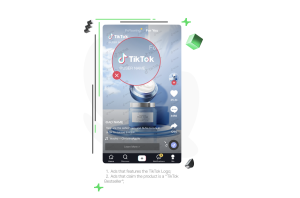
Fix: Stick to the Commercial Music Library, license a specific track directly from the rights holder, or use original music. If you’re working with a creator on a Spark Ad, make sure you have written authorization to use their likeness in paid amplification, not just permission to boost their organic post. For any licensed brand assets (logos, product imagery from a third party), keep documentation of your rights in case you need to appeal a false positive.
5. Prohibited or Restricted Products
Per TikTok’s official Advertising Policies, the policy framework operates across three tiers: prohibited (absolute bans with no exceptions), restricted (can advertise, but only with prior approval and specific creative requirements), and standard.
Prohibited outright:
- Illegal drugs and drug paraphernalia
- Weapons, firearms, ammunition
- Counterfeit goods
- Adult content
- Tobacco and most vaping products
- Cryptocurrency in most markets, with narrow exceptions for licensed exchanges.
If your product falls in these categories, no agency or clever copy will get it approved.
Restricted (allowed with prior approval):
- Alcohol, with 18+ targeting only.
- Gambling, which requires to include responsible-gambling disclaimers and addiction-support resources such as 1-800-GAMBLER (US) or GambleAware (UK), depending on local regulations and licensing requirements.
- Financial services, which require certification and don’t allow guaranteed-return claims.
- Health supplements and weight management, which face heavy scrutiny including a ban on before-and-after imagery.
- CBD, which had its policy revised in February 2026 – topical CBD is now permitted in the US, Canada, and UK with documentation of THC content below the legal threshold and a Certificate of Analysis from a third-party lab. Ingestible CBD remains prohibited globally.
As of early 2026, all advertisers in restricted categories must complete the Restricted Industry Certification (RIC) workflow inside TikTok Ads Manager before submitting any creative. Campaigns without RIC approval get auto-rejected at the creative review stage. This is the single most common reason advertisers in restricted verticals see their TikTok ads account not approved in 2026 because they’re trying to push creative through before completing certification.
Fix: Before building any campaign in a grey-area vertical, check TikTok’s Industry Entry Policy in the TikTok For Business Help Centre. If your category requires prior approval, apply before you need to run – the process takes time. In health and finance, running without documented approval even once creates a policy record that affects your account on all future submissions.
6. Inconsistent Ad Creative
TikTok reviews your creative, your caption, and your landing page as one connected story. If they don’t match each other, the ad fails. The logic is simple – if the three pieces tell different stories, the user is more likely to feel misled, which is bad for the platform.
Common inconsistencies that lead to rejection:
- The ad features Product A but the page sells Product B
- The caption promises a 50% discount but the page shows 30% off
- The ad targets users in their twenties but the landing page is designed for a senior demographic
- The ad copy is in English but the page is in another language that doesn’t match your targeting.
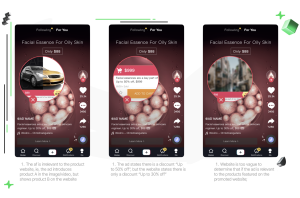
Fix: Before submitting, do one final review as a sceptical TikTok reviewer: does every claim in the video correspond to a truth on the landing page? Does the product colour, model, SKU, and price match exactly? Does the brand name shown in the video match the destination domain? For any offer-based ad (sale, discount, bundle), check the landing page live – not in preview – with the same eyes you’d use if you were a first-time customer seeing both for the first time.
7. Text, Grammar, and Formatting Errors
You’d be surprised how many ads fail for typos and bad formatting. TikTok treats spelling mistakes, excessive symbols, and gimmicky fonts as signals of low-quality, potentially scammy advertising.
Specific things the review flags:
- Symbols in display names or ad copy. (`!!!`, `$$$$`, ALL CAPS sentences).
- Misspellings in product names, brand names, or claims.
- Overlapping or unreadable on-screen text.
- Logos covered by stickers or mosaics.
- Text referencing UI gestures TikTok doesn’t have (like “swipe up” – that’s Instagram).
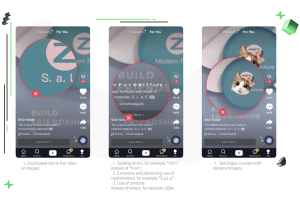
Fix: Proofread your copy out loud. Drop the gratuitous symbols. Make on-screen text readable at thumbnail size on a small phone. Remove any reference to swiping up, double-tapping, or other gestures TikTok doesn’t support. None of this should take more than a few minutes per ad.
8. AI-Generated Content Without Proper Labelling (New in 2026)
The newest rejection category, and the one catching brands off guard most often. An estimated 30% of TikTok ad creatives in 2026 use some form of AI-generated content – voiceovers, AI avatars, synthetic backgrounds, deepfake-style edits, AI-generated product demos. TikTok requires all of it to carry a visible AI label.
TikTok became the first major platform to integrate C2PA Content Credentials. C2PA is an open standard for embedded metadata that lets the platform automatically detect AI-generated content even when the creator doesn’t disclose it. TikTok has labelled over 1.3 billion AI-generated videos since the integration using a combination of Content Credentials, invisible watermarking, and detection models.
According to TikTok’s AI-generated content guide, any video using AI to generate or significantly alter realistic depictions of people, places, or events needs a label.
Captions written by ChatGPT? Fine, no label needed. AI-suggested hashtags? Fine. AI used for translation or script-writing? Also fine.
But an AI-generated avatar speaking your script, a synthetic voiceover that sounds human, or a face-swap of any kind – those require a label. Apply it through TikTok’s built-in “AI-generated content” toggle in Ads Manager during upload, or with a clear on-screen disclosure visible for at least the first few seconds.
The penalties for getting this wrong are escalating. Failure to disclose AI-generated content can lead to fines up to €15 million or 3% of global annual turnover under the EU AI Act, effective as of August 2026. Outside the EU, unlabelled AI content gets auto-flagged, suppressed in distribution, or removed.
The fix. Toggle the “AI-generated content” setting in Ads Manager for any creative that uses AI avatars, synthetic voices, or significantly altered imagery. TikTok’s own Symphony tools label automatically. Third-party AI tools require manual disclosure – the responsibility is on the advertiser, not the vendor.
9. Ad Format and Technical Non-Compliance
The simplest category to fix, but it still trips up advertisers who reuse assets across multiple platforms without checking the specs. Submitting the wrong asset type, duration, aspect ratio, or using the wrong campaign objective for the format you’re targeting results in rejection on a purely technical basis.
Common format-level mistakes:
- Using a 16:9 landscape video for In-Feed placement without a vertical version
- Submitting a video over 60 seconds for standard In-Feed without using a designated long-form format
- Setting up a Lead Generation campaign with a creative that doesn’t clearly direct users to a form
- Missing required end card or logo placement for market-specific requirements
TikTok has specific format requirements. Here are the specs you need to hit for In-Feed Auction Ads, pulled from TikTok’s official ad specifications:
TikTok In-Feed Ad Specs (2026)
| Element | Specification |
| Aspect ratio | 9:16 vertical (recommended); 1:1 and 16:9 supported |
| Resolution | 540×960 minimum (9:16); 640×640 (1:1); 960×540 (16:9). 1080×1920 recommended for vertical |
| File format | .mp4, .mov, .mpeg, .3gp, .avi |
| File size | 500 MB maximum |
| Bitrate | 516 kbps minimum; 2,500 kbps recommended |
| Video duration | 5–60 seconds (9–15 seconds is the engagement sweet spot); up to 10 minutes supported |
| Caption length | Up to 100 characters, 4 visible lines |
| Profile image | 98×98px, square, under 50 KB |
| Minimum daily budget | $20 per ad group |
The Safe Zone trap: Many advertisers place critical text (CTAs, product names, pricing) in areas TikTok’s interface overlays with the profile icon, like button, and caption. This makes the ad look broken or misleading and is flagged as low quality.
Fix: Before uploading, run your video through TikTok’s Ad Creative Audit Tool (available in Ads Manager under Creative Tools). It checks bitrate, resolution, and safe zone compliance automatically. If you keep getting low-quality rejections, export at 1080p with a bitrate of 2,500 kbps or above, and always export as a new file. Re-uploading the exact same file means TikTok’s system recognizes the file and is more likely to reject it again.
How to Fix a Rejected TikTok Ad: Step-by-Step
When an ad fails review, TikTok does give you a reason – it’s just buried in a tooltip you have to hunt for. Follow the below steps to fix your rejected TikTok ad.
Step 1. Find the rejection reason
Open Ads Manager, go to the Campaign tab, find the rejected ad, and click on the “Not Approved” status. The Suggestions module tells you which specific policy was violated. Don’t skip this – fixing the wrong thing wastes your resubmission.
Step 2. Make the correction at the right level
Creative issue? Edit the creative directly because changing it triggers a fresh review automatically.
Landing-page issue? Fix the page first, then resubmit.
Account-level issue (unverified business, restricted vertical without RIC certification)? The ad isn’t the problem; solve the account first.
Step 3. File one TikTok ad appeal – and only one
If you genuinely believe the rejection was a mistake, use the one-click Appeal button in TikTok Ads Manager. Submit one appeal per issue. Multiple appeals on the same ad don’t speed anything up; they slow the human review queue down and can flag your account as spam. Typical appeal review takes 24 to 48 business hours, longer during Q4.
For false-positive rejections where you have a real case to make, use this template inside the appeal note:
| “This ad was rejected on [date] for [exact policy clause cited]. The creative was exported at 1080×1920 in 9:16 vertical, bitrate 2,500 kbps. All on-screen text is within TikTok’s Safe Zone. Audio is sourced from the TikTok Commercial Music Library (track: [name]). The claim ‘[specific phrase cited]’ is a functional or cosmetic statement, not a medical or guaranteed-result claim, and is consistent with TikTok’s Advertising Policies, Section [reference]. Supporting documentation is attached. We respectfully request a manual review.” |
Specific, referenced, professional. Generic “please review again” appeals get auto-dismissed; appeals that cite the specific clause and demonstrate compliance get manual review and reverse at a meaningful rate. Attach any documentation that supports your case – clinical references for health claims, a licensing certificate for music, a screenshot of the landing page if the system misread it.
Step 4. If the appeal is rejected, don’t appeal again on the same creative
Repeated appeals on the same rejected ad can trigger an account-level review and, if you’re unlucky, a permanent ban. Revise the ad, upload it as a new ad ID, submit fresh. This ensures TikTok’s system treats it as a fresh submission rather than a previously-rejected asset.
Step 5. Document what worked
Keep a running list of what got rejected and what fixed it. Patterns emerge quickly within a single vertical. If softening “guaranteed” to “supports” cleared an ad, that’s a permanent fix in your brand’s copy playbook.
When the rejection reason is just “general policy violation”: that’s TikTok-speak for “the AI flagged something but isn’t going to tell you exactly what.” Look at the audio first – music licensing issues throw vague rejections more often than any other category. Then the landing page. Then the creative claims. Eight times out of ten, the issue is in one of those three places.
How to Prevent TikTok Ad Rejections
The fastest way to fixTikTok ad rejected status is to never trigger a rejection at all. The checklist below covers the most common pre-launch errors. Run through it before every campaign and you’ll cut your rejection rate dramatically.
Pre-Launch Checklist to Prevent TikTok Ad Rejection
| ✓ | Check |
| ☐ | Vertical 9:16, 1080×1920, MP4 or MOV, under 500MB |
| ☐ | Video duration 5–60 seconds (target 9–15 for engagement) |
| ☐ | Audio is clean and from the TikTok Commercial Music Library or your own original |
| ☐ | No copyrighted music from outside the CML |
| ☐ | No before/after imagery (especially in health, fitness, skincare) |
| ☐ | No absolute claims: “guaranteed,” “cure,” “100%,” “instant” |
| ☐ | No third-party logos, no TikTok logo, no “TikTok Bestseller” |
| ☐ | AI disclosure toggle is on if AI was used in the creative |
| ☐ | Landing page loads in under 3 seconds on mobile |
| ☐ | Privacy policy, terms, and contact info visible in the footer |
| ☐ | Product, price, and offer match the landing page exactly |
| ☐ | Spell-checked copy, no excessive symbols, no all-caps sentences |
| ☐ | RIC certification complete if you’re in a restricted vertical |
Trigger Words to Remove from Your TikTok Ad Copy
These are the words and phrases TikTok’s automated layer flags most aggressively. If you can rewrite without them, you should.
| Category | Avoid | Safer Alternative |
| Absolute claims | guaranteed, 100%, permanent, instant, cure | supports, helps, designed to |
| Health/weight | lose X lbs, melt fat, miracle, clinically proven | part of your wellness routine, may support |
| Financial | get rich, earn $X, passive income, no risk | tools for, learn about, explore |
| Urgency/scarcity | limited time only, act now, last chance | now available, new collection |
| Brand mentions | TikTok bestseller, as seen on TikTok | trending, popular |
| Sensationalist | secret, banned, doctors hate this | discover, find out, learn |
Why TikTok Agency Ad Accounts Reduce Rejection Rates
For advertisers running test budgets under $5K a month, working through standard TikTok accounts and the public rejection-appeal cycle is just part of the job. For brands running $50K, $300K, or several million a month, the math changes completely. Every day an ad is stuck in appeal is a day of stalled spend, lost data, and missed momentum.
TikTok agency ad accounts are issued through the platform’s official partner ecosystem. They carry verified status, sit in a higher trust tier, and have direct escalation paths to TikTok’s support team. They don’t bypass the policies, but they change the experience in three ways:
- Pre-launch policy review. Creative and funnel are reviewed before they enter TikTok’s queue. Most rejection patterns get caught in advance.
- Priority appeal channel. Rejections don’t sit in the public queue – a dedicated channel manager escalates directly. What takes 48 hours on a standard account often takes 4 hours through an agency partner.
- Pre-certified restricted verticals. TikTok agency accounts come pre-certified for gambling, social discovery, finance, and other regulated categories – no waiting 2–7 days for RIC certification.
How Tech4You Helps Brands Stop Hitting the Rejection Wall
Tech4You is a global advertising infrastructure provider with direct partnerships with TikTok, Meta, Google, and Snapchat. We built our model for advertisers who can’t afford the downtime that standard TikTok ad accounts create. In 2024, we issued 520 advertising accounts. Our partners deployed more than $100M in ad spend across our platforms in 2025, and the average growth for regular clients on our TikTok infrastructure is 21% after switching.
What that looks like in practice:
- Whitelisted TikTok agency accounts with verified status and elevated trust scores, ready for high-volume creative testing on day one. We issue accounts within 24 hours of terms being agreed and balance being funded.
- No spending limits and access to all GEOs. You’re not capped by what a self-service TikTok ad account can do, and you’re not restricted to advertising in the country your account was opened in.
- Pre-launch policy support team. Our team reviews creatives and funnels before they hit TikTok’s review system and flags what to fix to keep ads running longer. This is the single biggest reason rejection rates drop after a brand switches.
- 24/7 priority support with a dedicated channel manager who escalates issues directly to TikTok.
- Diversified account structure across Business Managers, GEOs, and account types. If one asset gets flagged, your campaigns don’t stop – we distribute the balance between accounts so your spend keeps moving.
- Multiple payment methods. Bank transfers, SWIFT, SEPA, USDT, VISA, and MasterCard.
- Free opening, free top-up, free replacement of blocked accounts. No setup fees, no top-up fees, and if an ad account does get blocked we replace it at no cost and migrate your remaining balance.
- Creative Lab for fast production of niche-specific videos and banners built to TikTok’s exact specifications.
- TechHub CRM, our proprietary dashboard for managing ad accounts, balances, and campaign metrics in one place.
Here’s how some of our clients describe their experience with Tech4You:
| “As an agency specializing in full-service digital marketing, we understand how important it is to have a reliable technical partner. Tech4You has proven to be exactly that. Their services have helped us ensure the stable operation of our projects and improve their performance. The accounts allow us to generate real traffic without the risk of blocks, and the fast budget top-ups enable us to work without delays.” — OMG Agency (Meta, Google, TikTok)“Our collaboration with Tech4You.io allowed us to scale our advertising efforts smoothly, avoid account blocks, and stay focused on delivering top-quality service. The agency accounts run reliably, top-ups are fast, and the team is always responsive.” — First Visa Services Dubai (Meta, Google, TikTok) |
Case Study: Social Casino Operator, $3M+ Monthly Budget
A top social casino partner came to us after being completely blocked across Meta and TikTok – ad accounts flagged, creatives rejected at scale, all internal attempts to spin up new accounts failing. We built a whitelisted infrastructure of 10 ad accounts with $20K+ daily spend limits each, paired with policy guidance, creative production, and a credit line. Within two months, the partner was running $1M monthly in compliant, predictable spend.
The way we work with new partners follows the same five-step pattern:
- You submit a brief about your product, target market, and current setup.
- We analyse the offer and develop a growth plan tailored to your vertical and scale.
- We sign a contract.
- We create the ad accounts, distribute your balance across them, and get everything ready for launch.
- You start launching and scaling campaigns, with our team supporting policy questions, account replacements, and any escalations.
If the standard rejection cycle is costing you launches, contact us to explore Tech4You’s TikTok agency accounts or read our deeper guide on how TikTok agency accounts work.
FAQ
Why are my TikTok ads not approved?
The most common reasons are misleading or exaggerated claims (especially in health, finance, and wellness), landing pages that don’t match the ad, copyrighted music outside the TikTok’s Commercial Music Library, low-resolution or improperly formatted video, and – new in 2026 – AI-generated content without the required disclosure label. The fastest way to find your specific reason is to open the Suggestions module, which’ll tell you which policy was violated. If no reason is given, the cause is usually at the account level (verification, restricted-industry certification, payment method).
How to fix a rejected TikTok ad?
Open the rejected ad in TikTok Ads Manager, click “Not Approved” to see the exact reason, and make the correction at the right level. For creative issues, edit the creative – that triggers a fresh review. For landing-page issues, fix the page first, then resubmit. For account-level issues like missing business verification or restricted-industry certification, solve those first. Resubmit once. Don’t file multiple appeals on the same ad – that flags your account and slows the queue. If your first appeal gets denied, revise the creative and upload as a new ad ID rather than appealing again on the closed case.
How long does TikTok ad review take?
Most ads are reviewed within 24 hours, often within minutes. Appeals typically take 24 to 48 business hours, sometimes up to 72 hours during high-volume periods like Q4 and Black Friday. Business verification is separate and takes 2 to 7 business days. Restricted Industry Certification, required from January 2026 for restricted verticals, also takes a few business days and must be completed before submitting creative. Brands on TikTok agency ad accounts typically see significantly faster appeal turnarounds.
Can agency accounts help with TikTok ad approvals?
Yes, with agency accounts you’ll have almost no TikTok ads disapproved. Because agency accounts operate inside TikTok’s official partner ecosystem, which gives them verified status, elevated baseline trust, and direct support escalation. Three things change concretely: pre-launch policy review catches most rejections before they happen, appeal turnaround is faster than the public queue (often hours instead of days), and ad accounts come pre-certified for restricted verticals. For high-volume advertisers and brands in sensitive categories, TikTok agency ad accounts often pay for themselves in saved downtime within a single quarter.